
Sustainable Building, All Things Stone Veneer

Sustainability has become a key consideration in residential construction and exterior remodeling—and for good reason. Today’s homeowners and builders are thinking beyond curb appeal, evaluating how exterior materials impact long-term performance, energy efficiency, and environmental responsibility.
Siding choices influence far more than appearance. They affect durability, maintenance requirements, and the overall environmental footprint of a home over its lifetime. One material frequently discussed in green building conversations is stone veneer—but how does it truly measure up from a sustainability standpoint?
Ply Gem takes a performance-first approach to exterior design. That means looking closely at how materials are sourced, manufactured, installed, and how they perform over decades of use. Below, manufactured stone veneer is compared to natural stone and other siding options through an environmental lens.
Stone veneer is a cladding material designed to replicate the look and texture of natural stone without the weight and resource intensity of full-depth stone. Manufactured stone veneer is created using a blend of concrete, stone aggregates, and mineral pigments, molded to achieve consistent profiles and realistic finishes.
Because manufactured stone veneer is typically about one inch thick and roughly one-third the weight of natural stone, it generally does not require additional structural support. This allows it to be installed on a wide range of exterior applications while reducing material demands during construction.
Natural stone is often assumed to be an inherently “green” material simply because it comes from the earth. In practice, however, its environmental impact is far more complex.
Extracting natural stone requires quarrying, a process that permanently alters landscapes and can disrupt local ecosystems. Quarrying also generates significant waste, as large volumes of stone are removed to yield usable material.
Natural stone is extremely heavy. Transporting it from quarries to fabrication facilities and job sites requires substantial fuel consumption, resulting in higher greenhouse gas emissions compared to lighter exterior materials.

Manufactured stone veneer was developed to address the cost, labor, and resource intensity associated with natural stone. From a sustainability perspective, it offers several meaningful advantages.
Manufactured stone veneer achieves the visual impact of natural stone while using significantly less raw material. By delivering the same aesthetic at a fraction of the mass, it conserves natural resources and minimizes waste throughout the supply chain.
Because manufactured stone veneer is lighter and more compact, it requires less fuel to transport and less space to store. Many manufacturers—including Ply Gem—produce stone veneer regionally, helping reduce long-distance shipping emissions and supporting more efficient distribution.
Unlike quarrying, manufacturing allows for tighter control over material use, water consumption, and waste management. Some manufacturers incorporate recycled aggregates or optimize production methods to reduce excess material. The reduced weight of manufactured stone veneer also lowers the need for structural reinforcement and heavy labor on job sites.
Sustainability isn’t only about how a product is made—it’s also about how long it lasts. Manufactured stone veneer is engineered to withstand moisture exposure, temperature fluctuations, and UV radiation once installed correctly.
Long-lasting materials reduce the need for replacement, repairs, and additional resource use over time. From a lifecycle perspective, durability plays a critical role in the overall environmental impact of an exterior system.
Ply Gem manufactured stone veneer, for example, is designed for long-term performance while delivering consistent quality and aesthetic reliability, all key considerations for sustainable exterior design.
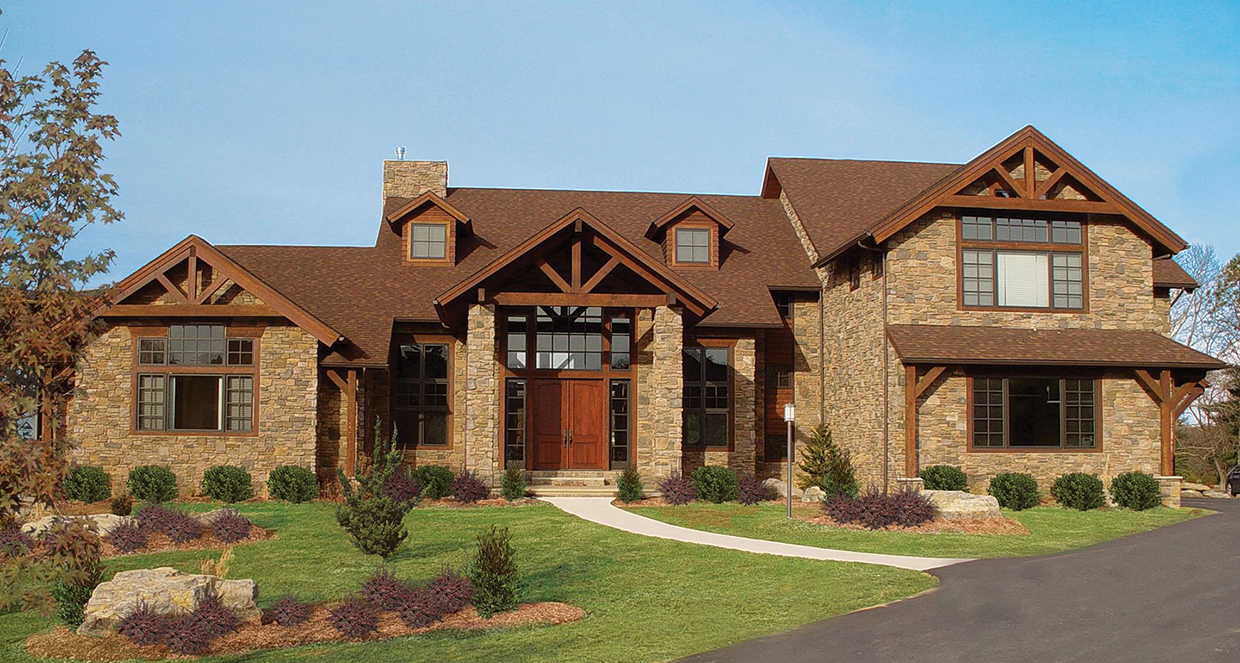
When evaluating sustainable building materials, it helps to consider stone veneer alongside other common materials.
Fiber cement offers durability and fire resistance; however, it requires energy intensity. Its manufacturing processes involve cement production, which is one of the largest contributors to global CO₂ emissions.
Wood is renewable when responsibly sourced, but it often requires ongoing maintenance, chemical treatments, and eventual replacement. Over time, these factors can reduce its sustainability advantages.
Manufactured stone veneer strikes a balance. It avoids the environmental disruption of quarrying full-depth stone while offering long service life and low maintenance. When produced and installed responsibly, it is a competitive eco-conscious exterior material.
Not all stone veneers are created equal—and when it comes to environmentally friendly siding options, it pays to look beyond appearance alone. Ply Gem Stone offers manufactured stone veneer options designed to balance beauty, performance, and long-term durability.
Manufactured stone veneer from Ply Gem offers the visual appeal of natural stone while reducing raw material use, transportation impact, and structural demands.
Learn more about making eco-friendly siding choices with Ply Gem in our blog post, “Stone Veneer: The Natural Choice for Your Home Remodel”.

Stone veneer is a lightweight cladding material designed to replicate natural stone. It includes thin natural stone and manufactured stone veneer made from concrete, aggregates, and mineral pigments.
Yes. Manufactured stone veneer uses fewer raw materials, requires less structural support, and produces lower transportation emissions than full-depth natural stone.
It conserves natural resources, minimizes waste, reduces fuel use during shipping, and allows for controlled manufacturing processes that can optimize water and material usage.
With proper installation, manufactured stone veneer is highly durable and resistant to moisture and UV exposure, offering decades of performance.
Local manufacturing, material transparency, durability testing, proper installation systems, and environmental certifications.
Yes. When responsibly sourced and installed, manufactured stone veneer supports durable, low-maintenance, and environmentally conscious exterior design.
Whether you’re a homeowner looking for a professional to help with installation or a pro interested in purchasing Ply Gem brands and product lines, we’ve got you covered.


