Doors, Windows, Windows and Doors, Build Forward, Build Smart
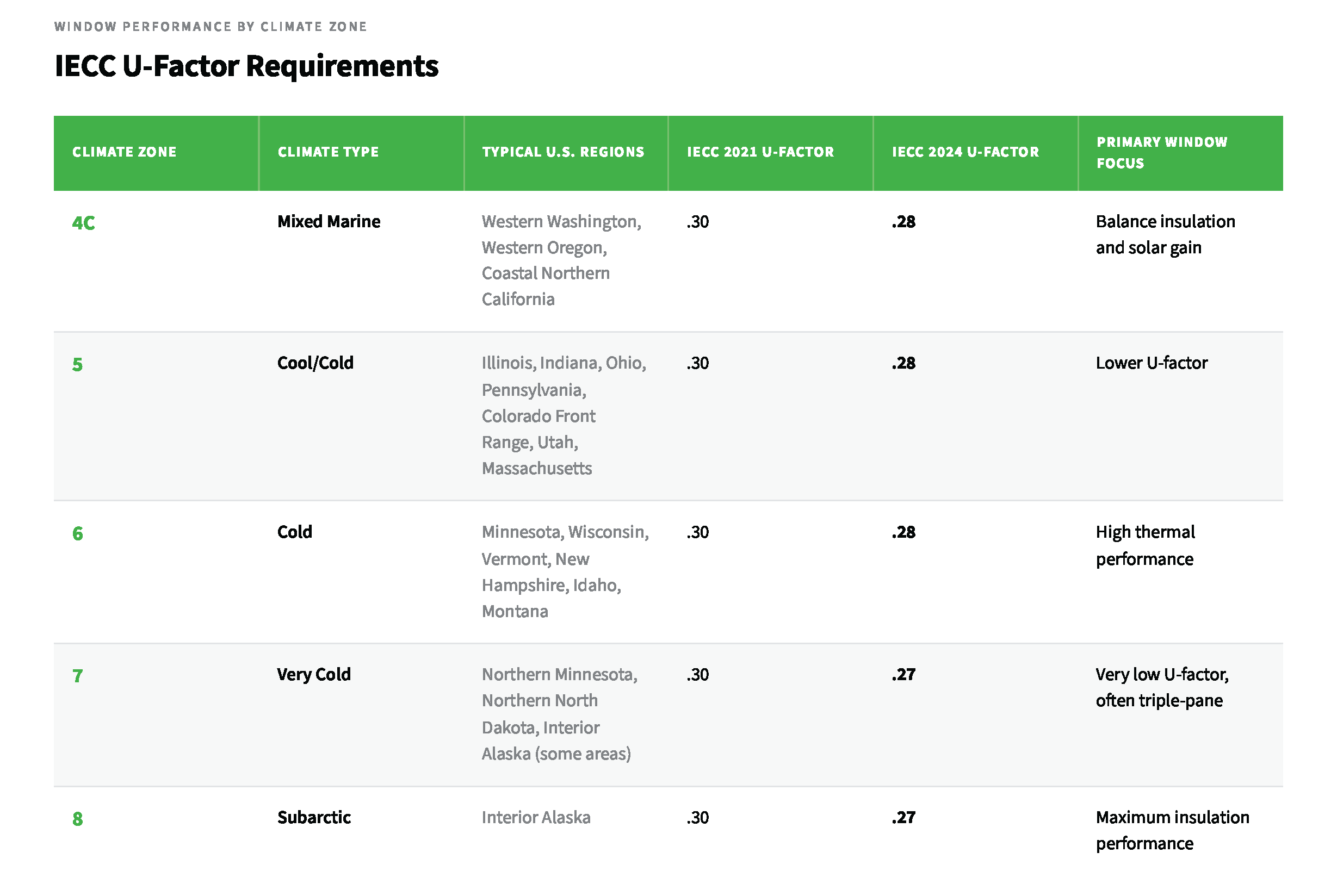
The International Energy Conservation Code (IECC) is updated every three years, and the transition from the 2021 to the 2024 IECC brought notable changes for window requirements in both residential and commercial buildings.
The 2024 International Energy Conservation Code (IECC) introduces more stringent window energy performance requirements, with the greatest impact in colder climate zones. Many regions are moving toward lower maximum U-factor requirements, meaning windows must provide better insulation and reduce heat loss more effectively. Higher-performing window configurations, like triple-pane windows, are increasingly important for builders to meet updated codes in regions that have adopted the new standards. A small improvement in window and door performance helps builders comply with 2024 IECC window requirements and reduce homeowners’ energy costs.
Currently, there’s not a single national energy code in the United States, with each state setting its own code compliance requirements. Some states, like Colorado and Minnesota, have amended the IECC to better align with regional needs. Always check your local jurisdiction to confirm you are meeting the window and door code requirements for your area.
Windows and doors are essential to a building’s thermal performance, and choosing the right window configuration helps meet energy code requirements while enhancing homeowner comfort. The 2024 IECC introduces several changes that directly affect window and door specifications:
With updated climate zone boundaries, some building projects may now fall under more stringent requirements. Always check with your local and state code for compliance.
The 2024 IECC sets lower U-factor limits for windows, which provide better insulation and reduced heat transfer. This enhances energy efficiency by minimizing heat loss in winter and heat gain in summer

Ply Gem 1500 Vinyl Collection windows offer HPMAX with a triple-pane insulating glass unit that creates two separate air spaces for superior insulation and lower U-Values. Also available is R-Core®, a high-density, pre-formed closed-cell polyurethane foam option that enhances thermal performance. The foam can be integrated into the window frame, sash, or both to increase insulation and deliver low U-Values to help meet IECC 2024 requirements. Available on 1500 Single Hung, Sliding and Picture windows with a brickmould or bevel frame.
The new SHGC limits, especially in warmer climate zones, now restrict the amount of solar radiation entering through windows. This helps reduce cooling loads and keep interiors more comfortable while using less energy.

The code now updates the maximum window-to-wall ratios for specific building types, promoting a balance between daylighting benefits and energy performance.
The 2024 code implements tighter limits on window air leakage. This can be achieved with improved sealing and installation practices to help prevent drafts and limit energy loss.
Stricter certification standards, along with labeling that supports window certification, help ensure that installed windows meet their rated performance. This increases homeowners’ confidence that their windows will improve energy efficiency and help reduce energy use.

IECC 2024 allows builders to comply with energy code requirements through either a prescriptive or performance approach. The prescriptive path requires each building component, including windows, to meet specific code-mandated U-factor and SHGC values. The performance path provides greater flexibility by evaluating the home’s energy efficiency as a complete system. This allows builders to balance window performance with improvements in insulation, HVAC efficiency, air sealing or other energy-saving measures. As long as the home’s overall energy performance meets IECC requirements, builders have more freedom to select products and optimize costs without sacrificing compliance.
Not all states have made the transition to IECC 2024. Many states use older IECC versions that have been amended, while others have adopted newer versions of the energy code.
The following interactive map from the Department of Energy provides a state-level view of which code each state follows. Before selecting windows and doors for a project, always verify the energy code requirements enforced by your state and local jurisdiction.
States currently using IECC 2024 or IECC 2024 with amendments:
Adoption of the IECC 2024 is expanding, particularly in cold-climate regions and in the high-performance building sector. IECC continues to set new standards for window energy performance, with 2027 updates coming soon. Specifying code-compliant windows and doors not only creates more efficient and comfortable homes but also reduces energy use, helping protect the environment.
Learn more about Ply Gem energy-efficient window and door options that help elevate performance.
Whether you’re a homeowner looking for a professional to help with installation or a pro interested in purchasing Ply Gem brands and product lines, we’ve got you covered.